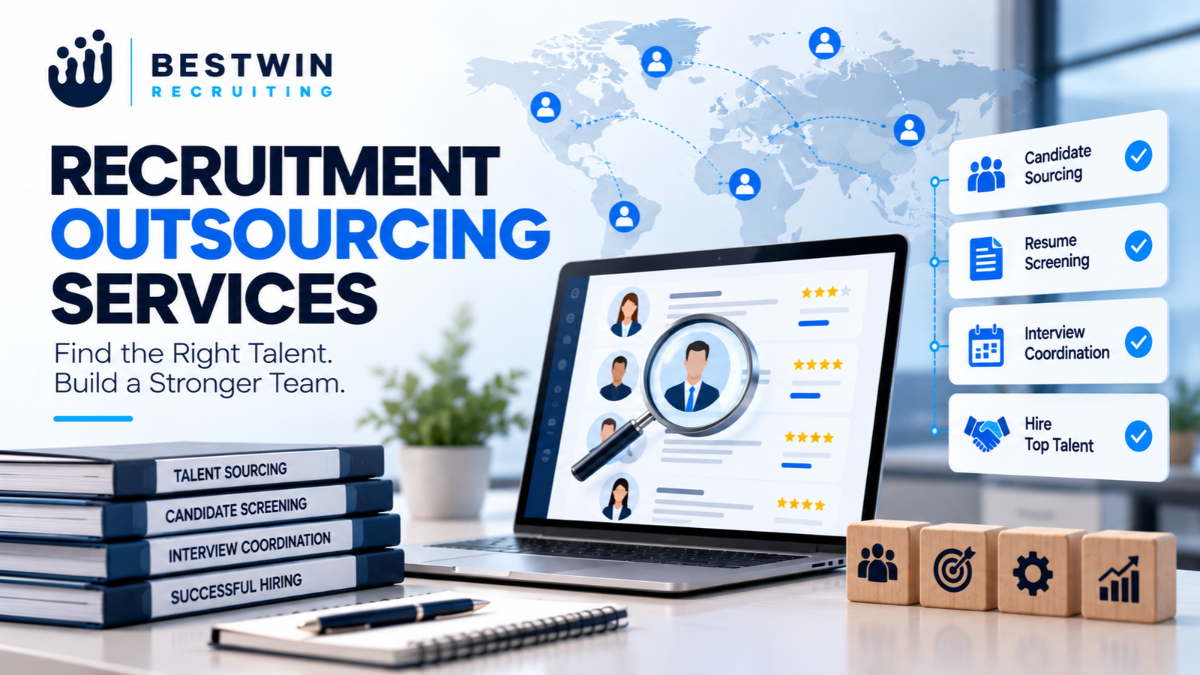
Recruitment outsourcing services are a full package of counsel to companies about recruitment and allocation of individuals for their needs. While of course the right staff for your company is essential for the growth of your company, sometimes it can take a long time to find the right staff, especially if you're looking for someone who has a specialized skill or you have several roles to fill. Recruitment involves the process of finding job applicants, screening their resumes, interviewing, and scheduling hires. HR teams can get inundated with these tasks and be hamstrung in their business operations.
Recruitment outsourcing services help businesses to manage their recruitment process by outsourcing to another company that specializes in recruitment services. The outsourcing may be to fulfil a requirement, or it may be to assist in the recruitment process. This will allow the internal team to focus on the business objectives, and trusted recruiting agents can help them in hiring the proper candidates.
Recruitment Outsourcing Services: What They Are and How They Work
Recruitment outsourcing services are services that entail collaborating with a third-party service to conduct a section or the entire recruitment requirement. Businesses could also employ a third-party recruitment agency to scour the job market, assess, and take on those who are interested in the role.
The amount of support will vary according to the needs of the company. Some companies hire external recruitment firms for candidate sourcing and resume screening, whereas others require help in the entire recruitment process, including understanding of job requirements, arranging interviews and helping with the final hiring decision.
Outsourcing recruitment might be the right choice for some, such as expanding businesses, companies with few HR resources, or companies that need to recruit for a certain number of jobs.
Types of Recruitment Outsourcing Services
There are different recruitment outsourcing models that have different levels of support. The correct choice of the option is dependent upon business goals, number of employees, and internal resources.
Recruitment Model | How It Works | Best For |
Recruitment Process Outsourcing (RPO) | Typically used by businesses that have an ongoing or high-volume hiring demand. | Businesses that have an ongoing or high-volume hiring demand. |
Recruitment Agency Services | Candidates come from a recruitment agency that has been assigned to the task of finding individuals for specific open roles. | Companies looking to hire candidates for particular roles. |
Embedded Recruiting | Businesses that have special recruitment needs. | Businesses that need dedicated recruitment support. |
Fractional Recruiting | Recruiters work on a flexible basis and can be recruited on a by-the-hour or per-project basis, as needed. It's also called Fractional Recruiting for small businesses and growing companies. | Small businesses and growing companies. |
Project-Based Recruiting | A recruiting partner supports a particular recruiting project. | Companies experiencing growth or a new department opening. |
It varies by model with regard to the flexibility, engagement, and recruitment capacity. Businesses need to assess their existing hiring issues prior to choosing the best fit.
Benefits of Recruitment Outsourcing Services
Recruitment Outsourcing Services offer a host of benefits.
1. Save Time During Hiring
Recruitment is a continuous process that involves advertising jobs, communicating with applicants, and the rest. These jobs can then be outsourced, and in-house resources can be used to train employees, interview prospects, and operate the business.
An external recruitment partner can also assist in arranging the recruitment process and keep in touch with the candidates.
2. Get Exposure to a Variety of Talent
Qualified candidates may not be easily found, especially if the companies are seeking candidates who have certain technical skills or experience in the industry. Sources of information are professional networks, candidate databases, and research of potential candidates.
It may benefit businesses in hiring candidates they are not able to attract via their recruitment methods.
3. Support Business Growth
As a business expands, there are certain employees that must be recruited. In a typical business, it may simply be one recruiter for a business that is offering a new service or entering a new marketplace, where it needs more support in recruiting.
Recruitment outsourcing services even offers flexibility based on the business requirement with regard to the number of people that can be included in the team.
4. Enhance the Candidate Screening Process
It takes time to review applications, particularly when there are a lot of applicants applying for a position. The job criteria will help recruiters whittle down the resumes to the most relevant and create a short list they can present to the hiring committee.
The criteria are clear, allowing the business to concentrate on some of the candidates who are qualified for the position.
5. Decrease the Burden on the Internal HR Teams
Internal HR teams may be responsible for a variety of activities such as employee relations, onboarding, policies, and performance management. It's not easy to invest enough time in a second recruitment project.
By outsourcing specific recruitment tasks, you can spread out the effort and enhance the recruitment process as a whole.
How Does the Recruitment Outsourcing Process Work?
An organized procedure can assist a company or recruitment partner in understanding their obligations and what is needed in their employees.
Step 1: Identify Business Needs
The reason for the recruitment process is explained by the recruiter, what jobs they want to recruit for, what skills/experience they are looking for, and when they want to recruit. This information will be used to determine the parameters to find a candidate.
Step 2: Create a Recruitment Strategy
Based on the requirements, recruiters will decide on the sourcing channels and have a sourcing strategy to attract potential applicants. This can involve professional networks, candidate databases, and personalized outreach.
Step 3: Source and Screen Candidates
The recruiters follow the agreed-upon criteria for searching for the optimal candidates and review the applications. They can also evaluate background, technical and skills competencies, qualifications, and communication skills, and relevant experience as required for the job.
Step 4: Coordinate Interviews
The recruitment team provides the recruiters with the proper details about the candidates they are going to meet, and assists them in organizing the interviews. Scheduling delays can be avoided, and the process goes smoothly with good communication between all concerned.
Step 5: Support the Hiring Decision
The shortlisted candidates are reviewed by the employer, and a decision is made. If agreed, the recruitment partner may be able to provide candidate communication, coordination, and follow-up.
Step 6: Analyze Recruitment Effectiveness
Indicators to track include time to fill, candidate quality, interview-to-offer ratio, and hiring manager feedback. These measurements are used to find opportunities to enhance future recruiting efforts.
Recruitment Outsourcing vs. In-House Recruiting
Recruitment outsourcing services can be just as effective for businesses to grow as can internal Recruitment. It depends on the needs of the company, how much they can afford in terms of their resources, and how much control they want.
Factor | Recruitment Outsourcing | In-House Recruiting |
Recruitment Resources | Access to external recruitment resources | Primarily uses own staff for recruitment |
Flexibility / Options | Options that can be agreed | Internal resources |
Company Knowledge | Induction and communication are required | Internal recruiters may be familiar with some aspects of the company culture |
Responsibilities | As agreed duties, completed by external provider | Directly by internal staff |
Best Use Case | Specialist or extra hires | Ongoing hiring |
Some businesses have both functions combined and make their own choices regarding recruitment methods and decision-making, or they outsource, source, or even rely on a third party to perform screening and/or augment their recruitment capacity.
How to Choose the Right Recruitment Outsourcing Partner
The cost of the recruitment services is not the only criterion to consider when selecting the right recruitment partner. These are some of the factors companies should take into consideration before making the decision.
Relevant Experience: Look for a provider who has experience in your industry, job requirements, and hiring challenges.
Service Flexibility: Make sure that they are available to support projects, fractional, embedded, or full recruitment.
Communication: Decide how often the recruitment team should inform you about the candidate and provide feedback on this person.
Screening: Ask about the types of screening that are provided, and how the provider determines whether candidates are a good fit for your needs.
Performance Measurement: Set reasonable hiring goals and define recruitment performance metrics.
Pricing and Scope: Before agreeing, know about the service fees, what is included in the service, what you are expected to do, and what additional fees will be incurred.
Having everyone agree on the terms can prevent any confusion when it comes to the hiring process.
How Bestwin Recruiting Can Help With Your Hiring Requirements
Bestwin Recruiting assists firms in getting versatile recruiting assistance as per the requirements of recruitment. There are options for the level of service support – fractional recruiting, embedded recruiting, embedded recruiting team – that offer companies options for the kind of support they need.
The recruiting partner can also be on hand and work with the company's HR team to find and filter out the applicants, and take care of the whole recruitment process for companies that have extra recruitment demands.
The appropriate service would depend on the number of jobs, skills needed, and whether or not internal recruiting is possible, as well as the goals of the business. It is important that businesses consult with a provider before deciding on their needs and the level of services to be used.
Frequently Asked Questions
What Are Recruitment Outsourcing Services?
Recruitment outsourcing services enable companies to work in conjunction with an external entity to accomplish particular recruitment responsibilities or the recruitment process.
Is Recruitment Outsourcing Right for Small Businesses?
Yes. Small businesses that don't have someone with a particular interest in recruitment or require assistance in the recruiting process for a specific position may find it beneficial to have flexible support in recruitment.
What Is the Difference Between Recruitment Outsourcing and RPO?
Not exactly. Outsourcing recruitment is referred to as recruitment outsourcing and is a generic name to be used for outsourcing any type of recruitment. A specific kind in which a supplier is accountable for a portion or the whole recruitment process for an organization is called Recruitment Process Outsourcing (RPO).
Can Businesses Outsource Candidate Sourcing?
Yes. A business may be outsourcing a certain process instead of outsourcing the complete process, such as outsourcing the sourcing and screening of resumes, or coordinating an interview.
How Can Businesses Measure Recruitment Outsourcing Success?
Common metrics include time to fill, quality of candidates, the ratio of interview to offer, candidate satisfaction with the hiring manager, and the number of candidates lost within a set amount of time.
Conclusion
Recruitment outsourcing services offer an adaptable choice to businesses to oversee their recruitment process, discover the most promising individuals, and save the time and effort required by their internal recruiting staff. External recruitment support can help organize a recruiting process in numerous ways, including sourcing candidates, screening candidates, etc., and organizing interviews.
Your company's recruitment goals, resources at your disposal, type of jobs you're hiring for, and size of your company will dictate the best approach to take. A robust, strong relationship, clear roles, and tracking hiring success can help develop a long-term, effective hiring process.